Study Theology and Clinical Mental Health Counseling Together
Pursue both the Master of Divinity (MDiv) and the Master of Arts in Clinical Mental Health Counseling (MA in CMHC) through a dual degree program that can be completed in as few as four years.
This innovative program combines theological training with clinical counseling expertise, preparing graduates to serve effectively in both ministry and mental health contexts.
123
Credit Hours
4 -5
Years to Finish

In Residence
Course Sequence
Year 1
Fall
BL300 Old Testament Foundations
MN335 Foundations of the Christian Life
MN350 Worship Foundations
TH300 Church History 1
TH310 Systematic Theology 1
Spring
BL301 New Testament Foundations
MN336 Christian Interior Life
MN351 Preaching Foundations
TH301 Church History 2
TH311 Systematic Theology 2
Summer
PR450 Intercultural Immersion
Year 2
Fall
Language 1 (BL310 or BL320)
MN412 Christian Life & Mission
PR411 Practice of Ministry: Internship 1
CC300 Foundations for Counseling
CC350 Helping Relationships: Skills & Practice
PR401 Abbey 1
Spring
Language 1 (BL311 or BL321)
MN440 Pastoral Imagination OR MN490 Leading Christian Communities
PR412 Practice of Ministry: Internship 2
CC305 Professional & Ethical Issues in CMHC
CC320 Counseling Theories & Practice
PR402 Abbey 2
Summer
CC360 Research & Program Evaluation in CMHC
Counseling Elective Course
Year 3
Fall
MN415 Practice of Counsel & Care
CC370 Psychopathology
CC330 Multicultural & Social Justice Issues in CMHC
CC335 Group Dynamics & Counseling
PR403 Abbey 3
*Optional MDiv elective, such as Language 2 (BL310 or BL320) or advanced coursework in biblical and theological studies.
Spring
TH440 Christian Life & Ethics
CC355 Trauma & Crisis Counseling: Theories & Practice
CC371 Advanced Diagnosis & Treatment
CC340 Counseling Throughout the Lifespan
PR404 Abbey 4
*Optional MDiv elective, such as Language 2 (BL311 or BL321) or advanced coursework in biblical and theological studies.
Summer
CC372 Testing & Assesment
CC410 Counseling Practicum
Year 4
Fall
BL490 Biblical Capstone
CC345 Lifestyle & Career Development
CC411 Counseling Internship 1
CC403 Issues in Professional Practice 1
Counseling Elective Course
Spring
TH490 Credo
CC490 CMHC Capstone
CC412 Counseling Internship 2
CC404 Issues in Professional Practice 2
Counseling Elective Course
WTS welcomes transfer students and transferred coursework. Contact Admissions to learn more about which of your courses will transfer.
Looking for another Path to Ministry?
The Master of Divinity is customizable to support your call. Learn more about your options by clicking one of the links below or view all of our programs.
Why is this program unique?
Be licensed and have an education fully integrated with your faith.
Hear from Dr. Elizabeth Pennock and Dr. Chuck DeGroat as they share the vision behind Western Theological Seminary’s MA in CMHC program in the video below.
Mission
The mission of the MA in Clinical Mental Health Counseling program at Western Theological Seminary is to equip students (1) with the knowledge and skills to provide clinical mental health counseling that is research-based, relationally oriented, trauma-informed, and rooted in the Christian soul care tradition, and (2) to provide professional clinical mental health counseling for diverse client populations.
Program Objectives
Trauma-Informed Counseling Practice
Graduates will demonstrate proficiency in facilitating client growth through the effective application of evidence-based, trauma-informed counseling theories and techniques in ways that foster holistic client development in the context of a strong therapeutic relationship.
Ethical Awareness and Integrity
Graduates will be able to effectively apply ethical decision-making models to counseling situations, perceptively analyzing clinical situations in a holistic manner for the sake of providing ethical care.
Cultural Competence and Humility
Graduates will have the ability to select and implement culturally sensitive counseling interventions and effectively engage with clients from diverse cultural backgrounds in ways that demonstrate sensitivity to the client’s unique beliefs, practices, and experiences.
Self-Awareness
Graduates will recognize their strengths and limitations with humility and wisdom, demonstrating the ability to effectively evaluate their personal development and counseling practice in order to make appropriate adaptations for future professional situations.
Christian Soul Care
Graduates will be able to articulate how the Christian soul care tradition informs the modern practice of clinical mental health counseling and will demonstrate the ability to provide counseling services from a theoretical framework that integrates the priorities of Christian care with professional counseling competency.
Frequently Asked Questions
How can a dual degree help me as either a future pastor or future counselor?
Western Theological Seminary is honored to offer both degrees because it believes both can equip future pastors and counselors with tools they would not have without the presence of the other discipline. Pastors do much counseling in their vocation, and counselors benefit from a strong theological and biblical foundation for the work they do.
How long will it take and how many credit hours?
The MDiv requires 87 credit hours and is normally completed in 3 years, while the MA in CMHC requires 69 credit hours and is also typically completed in 3 years. Dual degree students are able to complete both degrees by taking 123 credit hours (instead of 156 credit hours) and can complete both degrees in 4-5 years (rather than 6+ years).
What if I decide I only want to do one after beginning the dual degree program?
A student is able to continue forward with only one degree at any point in their education. This would happen in consultation with the registrar and program directors.
Have questions about how to check licensing requirements? Contact us at [email protected].
Will this degree meet all educational requirements for licensed professional counselors in the State of Michigan?
Western Theological Seminary is accredited by The Association of Theological Schools (ATS). With this accreditation, the MA in Clinical Mental Health degree meets all educational requirements for licensed professional counselors in the State of Michigan.
Will the MA in Clinical Mental Health be CACREP Accredited?
Western Theological Seminary is seeking accreditation from the Council for the Accreditation of Counseling and Related Educational Programs (CACREP). Have more questions about CACREP and how this is important?
Contact admissions at [email protected] for more information.
What prerequisites are required to apply?
A bachelor’s degree from an accredited institution is required to apply for the MA in Clinical Mental Health Counseling.
Contact admissions at [email protected] to learn more.
What will this degree cost?
Tuition rates are set annually, and based on credit hours, and are the same for all Masters programs at WTS. View current tuition rates here.
Costs
AFFORDING sEMINARY
Tuition rates vary for different programs and degrees. At WTS, we understand that finances can be a major concern for prospective students. That’s why we offer a variety of scholarships and loan options.
Apply
APPLICATION PROCESS
Your application will be completed fully online. Once you complete your application be sure to watch your email. Some programs require additional interviews or follow up.
Have questions? Email us at [email protected].

1.
Create an Account

2.
Fill out an application

3.
Upload Requested Materials

4.
Request letters and additional materials

5.
Submit Your Application

6.
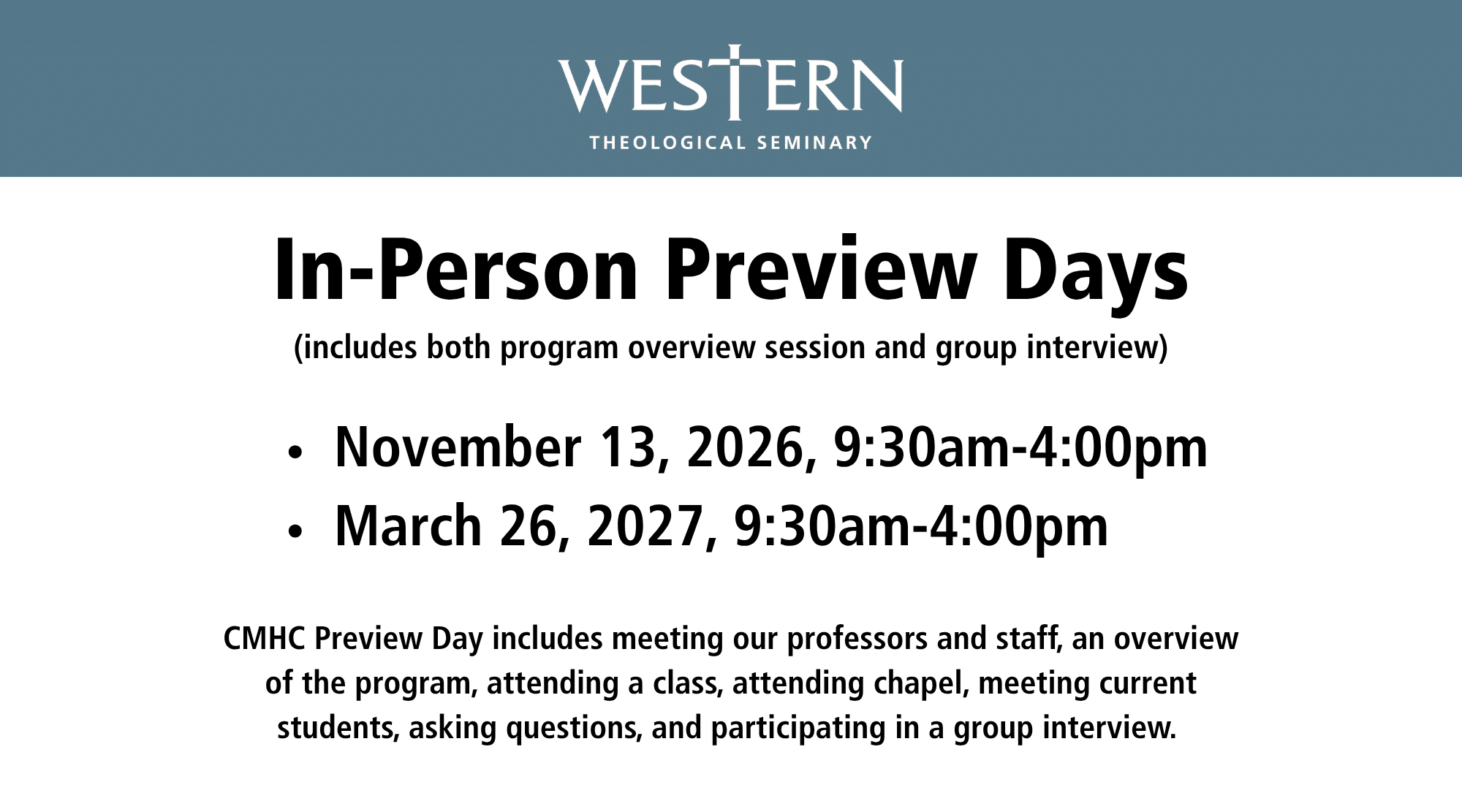
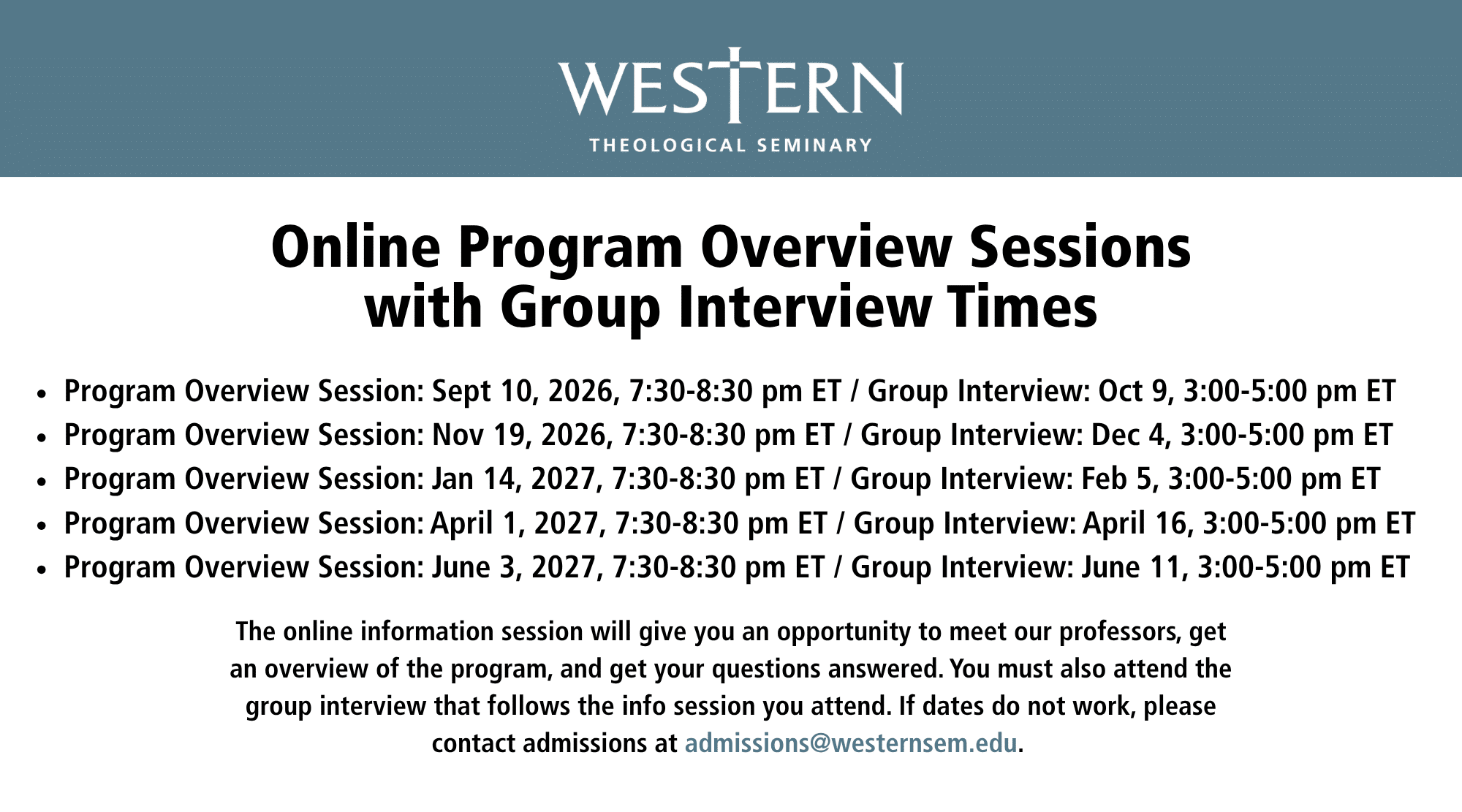
Attend a Program Overview Session and Group Interview

7.
Complete the psychological assessment online & schedule an individual Interview

8.
Admission Decision Released
Interested in Transferring to WTS?
At Western Theological Seminary, you can transfer your credits and join a community deeply committed to forming faithful Christian leaders. Let’s talk about how your journey can continue—and flourish—here.
Have more Questions?
Have questions about the application or process?
Contact the admissions office:
616-372-3649
[email protected]